Start here
AI humanizer vs paraphraser: which do you need?
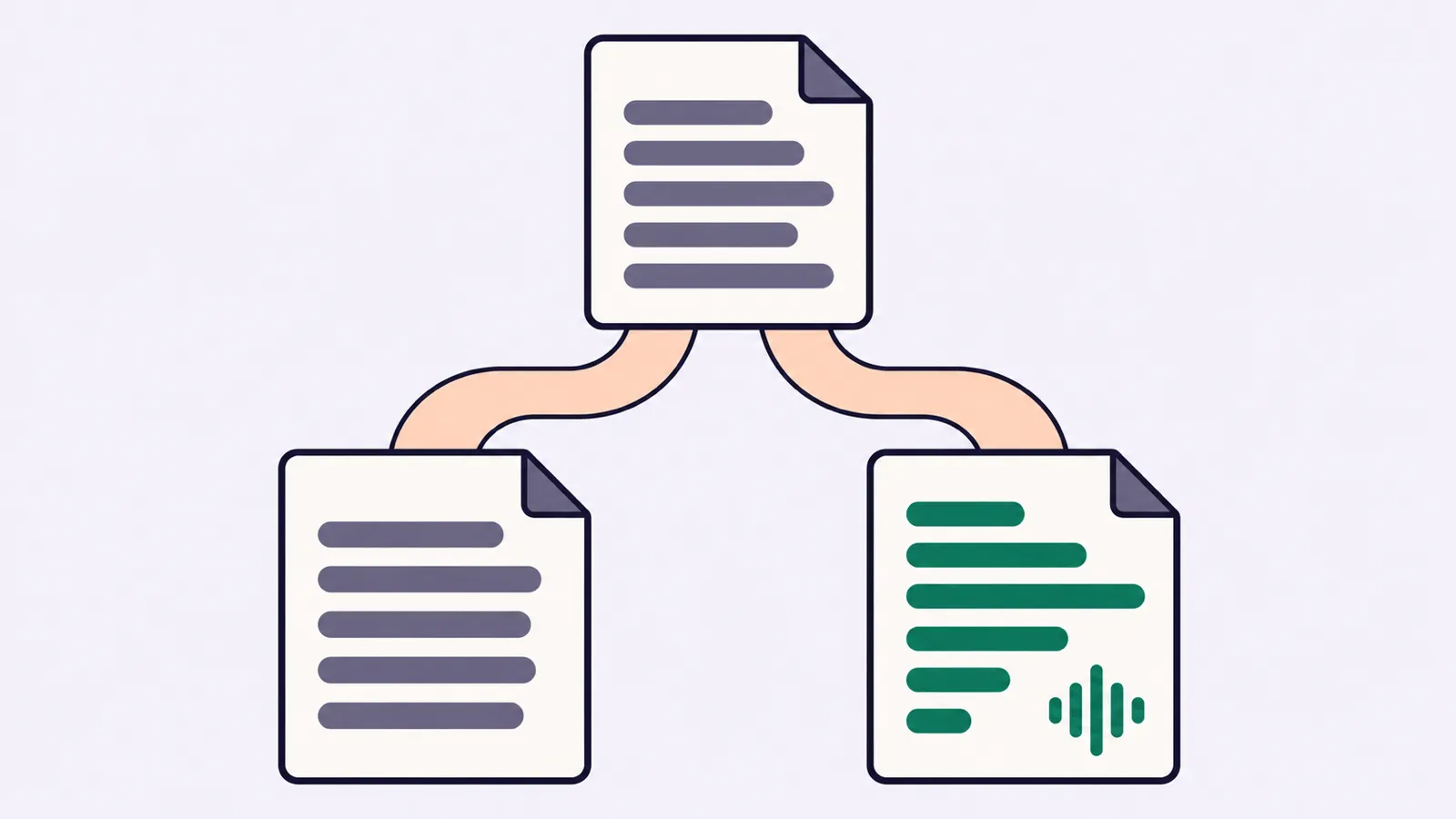
A paraphraser changes how an idea is expressed. An AI humanizer aims to make a passage read more naturally. Both rewrite text, and their features can overlap.
The difference is mainly the editing goal. You might paraphrase a dense sentence to explain it more clearly. You might humanize a whole paragraph because it sounds stiff, repetitive, or detached from its reader.
Neither label guarantees that the result will preserve the meaning. Both kinds of tool can produce a fluent sentence that says something different.
Start by naming the problem in your draft. That gives you a better basis for choosing than the label on an input box.
What paraphrasing means
Paraphrasing expresses an idea in different wording while preserving its substance. It can involve more than swapping synonyms. You may change the sentence structure, reorder related details, or explain a term.
Original: "The room cannot be booked while maintenance work is in progress."
Paraphrase: "Bookings are unavailable during maintenance."
The same restriction remains. The wording and structure change.
A paraphrase is not necessarily shorter. If the reader needs an unfamiliar term explained, a useful paraphrase may be longer.
It is also not automatically a summary. A summary selects the main points and leaves out some detail. A paraphrase generally aims to carry the relevant meaning of the passage being restated.
These distinctions matter when you ask a tool to rewrite. "Make this shorter" may encourage it to drop information you wanted to preserve.
What humanizing adds to the goal
Humanizing focuses on how the text feels to its intended reader. That can include sentence rhythm, tone, repetition, and the distance between the writer and reader.
AI-style draft: "It is recommended that individuals ensure the completion of the registration process prior to attending the session."
Straight paraphrase: "Participants should finish registration before they attend the session."
Reader-focused rewrite: "Please register before the session."
Both rewrites can work. The second addresses the reader directly and removes wording that a short instruction does not need.
It is not better in every context. A report describing participants' obligations might need third-person wording. A registration email can speak directly to "you."
The AI humanizer guide explains why natural writing depends on purpose rather than a fixed list of casual words.
Compare the jobs side by side
| Question | Paraphrasing | Humanizing |
|---|---|---|
| Main goal | Express an idea differently without changing its substance | Make a passage clearer and more natural for its reader |
| Typical focus | Wording, structure, explanation | Tone, rhythm, repetition, directness |
| Useful starting point | A sentence whose meaning is settled | A draft whose content is usable but whose voice feels stiff |
| Main risk | Changing meaning while changing wording | Changing meaning or adding a voice the writer does not want |
| Final check | Does the restatement remain accurate? | Is it accurate, useful, and appropriate for this reader? |
These are editing distinctions, not fixed product categories. A tool sold as a paraphraser may adjust tone. A humanizer may mostly change individual words. Judge the output and controls rather than assuming a label describes the whole system.
When a paraphraser is the better fit
Use paraphrasing when the idea is sound and you need another way to express it.
You may be explaining a technical sentence to a general reader. You may be removing an awkward repeated phrase. You may want to compare two sentence structures before choosing one.
Original: "The application retains locally stored changes until a network connection becomes available."
Paraphrase for a general reader: "The app keeps changes on your device until it can connect to the internet."
This rewrite explains "locally stored" without promising what happens after the connection returns. Adding "then uploads them automatically" would introduce a behavior the original did not state.
That is a useful test: a paraphrase should not fill a gap with a plausible guess.
When humanizing is the better fit
Use a humanizing pass when the problem extends across the paragraph.
Perhaps every sentence has the same shape. Perhaps the introduction praises the topic without explaining it. Perhaps a routine email sounds like a formal announcement.
Before: "We would like to express our appreciation for your patience. Your patience has been valuable while our team has worked to resolve the issue. We are pleased to confirm that access has now been restored."
Humanized rewrite: "Thanks for your patience while we fixed the issue. Your access is restored."
The improvement comes from removing repetition and placing the useful update where it is easy to find. A synonym swap would leave the main problem intact.
Still, there is no need to run a tool when you can see the edit yourself. Our manual editing guide covers that approach.
Neither method creates a new source
Changing wording does not make someone else's idea yours. If the context requires attribution, a paraphrase still needs it.
Do not treat rewritten text as evidence that you researched a claim. Go back to the source and check what it says.
Keep direct quotations exact. If you rewrite a quotation, remove the quotation marks and make clear that you are paraphrasing, with the appropriate attribution.
The same principle applies to AI-generated material. Rewriting a draft does not repair invented references or unsupported claims. It can make them sound more convincing, which makes checking more necessary.
Both can quietly change certainty
Original: "The trial suggests that the revised layout may help some users find the settings."
Unsafe rewrite: "The revised layout helps users find settings faster."
The rewrite drops "suggests," "may," and "some." It also adds speed, which the original did not mention.
That failure could come from either kind of rewriting tool. The category does not protect you.
Mark conditions and cautious language before you begin. Check them after the rewrite. Keep a less elegant sentence if it expresses the evidence more accurately.
Do not use a detector score to settle the choice. It measures neither faithfulness to a source nor usefulness to a reader. See the detector guide for the limits of that approach.
A simple decision process
- Identify the main problem in one sentence.
- If the meaning is unclear, fix the idea before rewriting.
- If the wording needs another form, try a paraphrase.
- If tone and repetition affect the whole passage, try a humanizing pass.
- Compare the result with the original before accepting it.
You can combine the approaches, but avoid sending a passage through several tools without a reason. Each new version creates another chance for a detail to drift.
Keep the draft that best serves the reader while preserving the meaning. The name of the process matters less than that result.