How AI humanizers rewrite text: mechanics and limits

AI humanizers take an existing draft and generate alternative wording. Language generation research explains how a model can do this, though it does not establish which models, prompts, or settings a particular commercial tool uses.
One approach is conditioned sequence generation. The model uses the draft as context, calculates probabilities for possible next tokens, and selects them through a decoding strategy. This process can change vocabulary, clause order, and sentence length.
The mechanics of automated paraphrase generation
Neural language models learn statistical patterns from large collections of text. They use those patterns to predict sequences of words or subword tokens. This differs from looking up words in a synonym dictionary or applying fixed grammar rules: the model generates a new sequence in response to the input.
Conditioned sequence generation
In conditioned sequence generation, the model receives a prompt or source passage that guides its token predictions. The input shapes the model's internal representations and the outputs it considers plausible. This keeps generation related to the draft, but does not guarantee that every detail survives.
Text-to-text generation can use sequence-to-sequence transformers or autoregressive decoder-only models instructed to rewrite a passage. In these setups, each next-token prediction depends on two things: the input supplied by the user and the tokens already generated in the current output. The model uses both when calculating what can plausibly follow. The draft provides context throughout generation; it is not simply a list of words to replace one at a time.
At each step, the model calculates numerical scores called logits across its vocabulary. These scores reflect how likely each token is to come next in context. They draw on patterns learned during training; they do not verify the facts in the passage.
Next-token probabilities and decoding strategies
The decoding strategy turns those scores into text. A model's vocabulary can contain tens of thousands of tokens. How the system chooses among them affects the wording and variety of the draft.
The Hugging Face text generation guide explains the settings used in this process. A mathematical function called softmax converts logits into probabilities. The decoding algorithm selects a token, adds it to the sequence, and repeats until it reaches an end-of-sequence token or a length limit.
Two approaches are greedy search and sampling, described in the Hugging Face generation strategies documentation.
Greedy selection versus sampling
Greedy search selects the token with the highest predicted probability at each step. It makes a deterministic choice: given the same scores, it picks the same token.
Choosing the most likely token at each step can produce repetitive loops or formulaic phrasing in longer passages. A sequence of locally likely choices does not necessarily make the best sentence overall.
Sampling, also called multinomial sampling, draws a token at random according to the probability distribution. A token with a twenty percent probability has a twenty percent chance of being chosen. One with a two percent probability still has a small chance.
Sampling can produce different wording from the same input and break repetitive phrasing. Unrestricted sampling can also select low-probability tokens that lead to nonsense or errors. Top-k and nucleus (top-p) filtering restrict the candidate set before the system draws a token.
Temperature and probability modulation
Temperature adjusts the probability distribution used for sampling. It is a positive value that divides the logits before softmax converts them into probabilities.
Below 1.0, temperature increases the differences between logits and concentrates probability on the highest-ranked tokens. As it approaches zero, sampling approaches greedy selection.
Above 1.0, temperature flattens the distribution, giving lower-ranked tokens a greater chance of selection. This allows more varied wording, but can also admit choices that disrupt the sentence or change its meaning.
Temperature does not measure quality or accuracy. Under greedy decoding, changing a positive temperature does not change the selected token because it leaves the ranking intact.
Controlled paraphrase models
Models can also use explicit controls for the kind of rewrite they produce. Krishna et al. (2023) developed DIPPER, an 11-billion parameter paraphrase model described in arXiv:2303.13408.
DIPPER was trained to paraphrase paragraphs using surrounding context. Scalar control codes guide lexical diversity and content reordering. The lexical control lets users choose whether to preserve vocabulary or replace words more extensively. The reordering control lets them choose whether to keep the original clause order or reorder sentences across the paragraph. Preserving words and preserving their order are separate choices, even though both affect how different a rewrite looks.
DIPPER shows how conditioning inputs can guide structural changes as well as word choice. Its controls belong to that model; they should not be assumed to describe every humanizer.
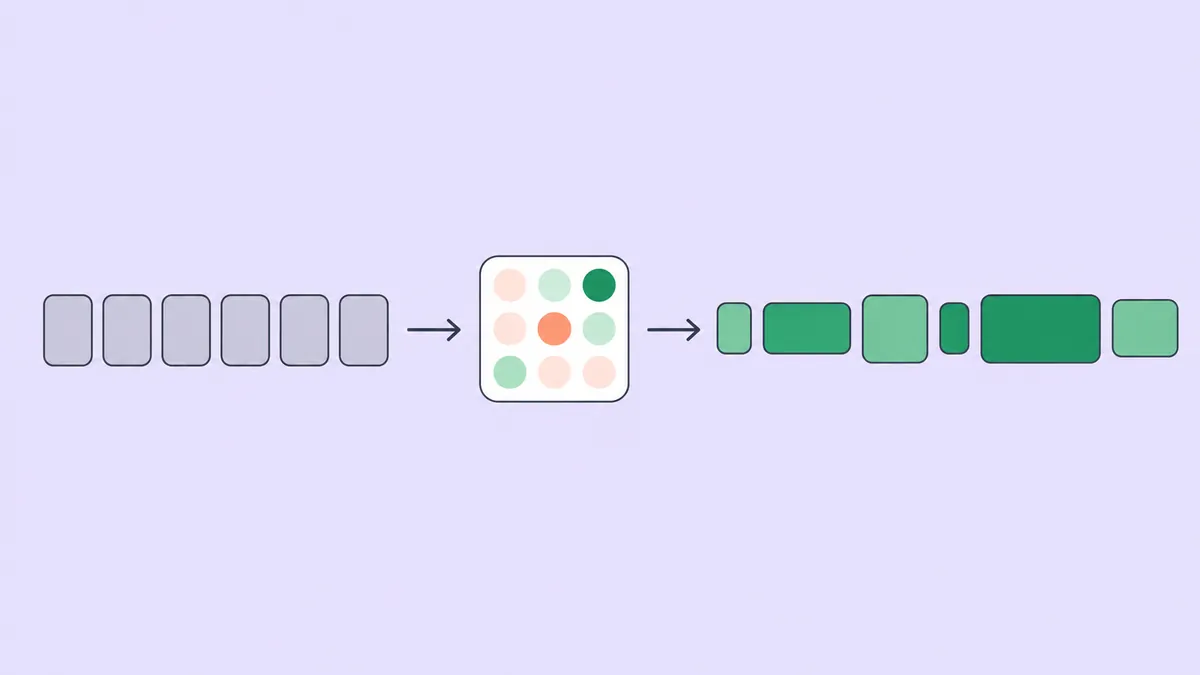
Statistical detector signals versus internal humanizer steps
Perplexity and burstiness describe properties of text. They are sometimes discussed as though they were rewriting instructions. A change in either measurement does not, by itself, show that a tool calculated or optimized it during generation.
Perplexity as model-specific predictability
Perplexity measures how well a probability model predicts a text sample. The Hugging Face perplexity documentation explains the calculation and its implementation.
Mathematically, it is the exponentiated average negative log-likelihood of a sequence under a specified model. In plain terms, it measures how unexpected the model finds the text. Words assigned high probabilities lead to lower perplexity. Words assigned low probabilities lead to higher perplexity, whether they are unusual terms, unfamiliar phrasing, or errors.
There is no universal perplexity value for a sentence. The score depends on the model used to evaluate it, including its size, training, and tokenization. A small model trained on general web text can score a passage differently from a larger model or one trained on specialist literature. Tokenization also changes the calculation: different ways of dividing the text into tokens affect the probabilities being measured. Scores from different setups therefore need care when compared. A number without its evaluation setup leaves out part of what it means.
High perplexity does not establish good writing. Random words can be hard for a model to predict and useless to a reader. The score measures predictability, not clarity or accuracy.
Burstiness as sentence-level variation
In this context, burstiness refers to variation in sentence-level perplexity across a document. A familiar transition may be easy for a model to predict, while a dense technical sentence may be harder. The resulting scores rise and fall across the passage.
Some early detection approaches treated relatively uniform predictability, or low burstiness, as a sign of generated text. That was a heuristic, not proof of authorship.
Splitting clauses, changing sentence lengths, or choosing different words can change a passage's predictability profile. Those changes can affect burstiness without requiring a separate burstiness control.
The evolution of AI detection systems
Detector methods differ and can change. GPTZero's support documentation on interpreting burstiness and perplexity says it stopped using those metrics for AI detection in autumn 2023 when it moved to a deep-learning architecture.
GPTZero's technology overview describes a system with multiple layers and sentence classifiers trained on human writing and text from different model families. It also describes defenses such as paraphraser shields intended to identify automated rewriting and character substitution.
A rewrite that changes word predictability may affect a simple statistical check. That does not establish how a trained classifier will respond. Claims about evading detection need to identify the detector and the conditions tested.
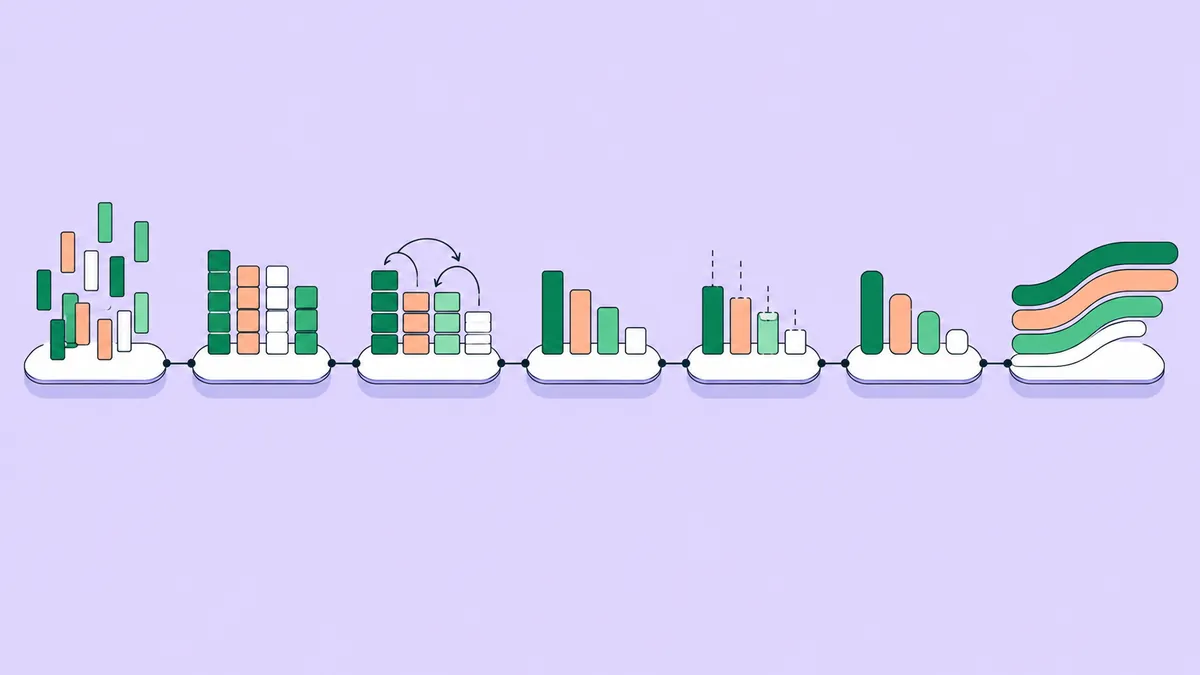
Recursive paraphrasing and detection evasion research
Researchers have tested how detectors respond when generated text is paraphrased repeatedly.
The Sadasivan et al. recursive paraphrasing study
Sadasivan et al. (2023) examined recursive paraphrasing in "Can AI-Generated Text be Reliably Detected?", available at arXiv:2303.11156.
The studied recursive process feeds a paraphrase back into the model and repeats the rewriting step across multiple iterations. Instead of stopping after a single transformation, the output of the first rewrite becomes the input for the second, progressively altering the passage's statistical profile.
The authors investigated how different model architectures perform this task. DIPPER and LLaMA-2-7B-Chat were used for recursive paraphrasing attacks because both models can rewrite entire passages in context. DIPPER is an 11-billion parameter model trained specifically for paraphrasing with scalar control codes, whereas LLaMA-2-7B-Chat is an instruction-tuned conversational model guided by a dedicated paraphrasing system prompt. In contrast, the T5-based paraphraser was used in separate sentence-by-sentence paraphrasing tests, rewriting individual sentences in isolation rather than processing the entire text at once.
The experiments evaluated target passages of approximately 300 tokens generated by models including OPT and GPT-2 architectures. The researchers tested evasion against multiple defense categories: statistical watermarking schemes that embed green-list token biases during generation, zero-shot detectors relying on log probabilities or rank distributions, supervised neural network classifiers trained on human and synthetic corpora, and retrieval-based systems that compare submissions against stored generations.
In the reported tests, paraphrasing reduced detection performance, though the results varied by detector and test setting. The authors evaluated content preservation and text quality through automated benchmarks, such as question-answering retention, alongside human ratings. They found that repeated rewriting altered token distributions while keeping general text quality relatively intact within the experiment's bounded conditions.
Research findings versus commercial realities
The study measured outcomes under controlled academic benchmarks. Its roughly 300-token passages differ from single sentences or longer documents. Average perplexity scores rose overall after repeated paraphrasing. The authors also noted that acceptable quality loss depends on the use: a social media post may tolerate more degradation than a news article.
The test results do not establish how a commercial humanizer will fare against an untested detector. Content preservation scores on a benchmark also cannot guarantee that a deadline, exception, or technical term will survive in a particular document.
Worked example 1: A bureaucratic workplace update
This workplace update buries its point in formal language:
Before: "The implementation of the new automated data entry workflow serves as a crucial milestone in our efforts toward facilitating significant reductions in ongoing operational expenditures across the department."
The edit makes four changes:
- "Serves as a crucial milestone in our efforts toward" becomes "is a step toward." This keeps the claim of progress and removes the self-congratulation.
- "Ongoing operational expenditures" becomes the plainer "operating costs."
- "Facilitating significant reductions" becomes "reducing." This drops the vague claim about the size of the savings.
- The workflow stays as the subject, and "across the department" keeps the original scope.
After: "The new automated data entry workflow is a step toward reducing operating costs across the department."

Worked example 2: A conditional policy statement
This security policy includes a requirement and an exception:
Before: "Unless an explicit exception is granted by the system administrator prior to deployment, all legacy database endpoints must be decommissioned by November 15 to prevent unauthorized access."
Move the requirement to the front and keep the exception at the end:
After: "All legacy database endpoints must be decommissioned by November 15 to prevent unauthorized access, unless the system administrator grants an explicit exception prior to deployment."
Check each requirement against the original:
- The scope remains all legacy database endpoints.
- The required action remains decommissioned.
- The deadline remains November 15.
- The stated purpose remains to prevent unauthorized access.
- The authorized role remains the system administrator.
- The exception requirement remains an explicit exception.
- The timing condition remains prior to deployment.
Keep "must." Replacing it with "should" or "can" would weaken a mandatory requirement into advice or permission.
Dropping "explicit" would leave room for assumed permission. Removing "prior to deployment" would remove the deadline for granting the exception. Keep "decommissioned" too: a looser synonym could change the required procedure. These words carry policy meaning even if a rewrite sounds smoother without them.
Worked example 3: A stiff follow-up message
This follow-up takes too long to ask its question:
Before: "I am writing this communication to respectfully inquire whether you have had the opportunity to review the previously submitted project proposal, as your feedback is of utmost importance to our schedule."
Remove the opening ceremony:
After: "Have you had an opportunity to review the project proposal? Your feedback is important to our schedule."
The question replaces "I am writing this communication to respectfully inquire whether." It remains professional without announcing the act of asking.
The edit also drops "previously submitted" to shorten the reference to the proposal. It gives the scheduling reason its own sentence and reduces "of utmost importance" to "important." The recipient still knows what is being requested and why. The rewrite adds no deadline.
What to check in an automatic rewrite
Compare the rewrite with the original before judging it on fluency. Check what changed at the phrase, sentence, and paragraph level, then ask whether those changes preserved the meaning.
Observable outputs of automated rewriting
Look for these types of edits:
- Phrase compression: Shortening wordy clauses, cutting redundant opening phrases, and replacing abstract noun phrases with direct verbs.
- Verb changes: Converting passive constructions to active phrasing when the agent is present in the source text.
- Rhythm and sentence boundaries: Altering cadence by splitting long sentences into shorter units or connecting adjacent clauses.
- Clause reordering: Shifting subordinate clauses or modifying phrases between the beginning and end of sentences.
- Vocabulary substitution: Replacing individual words with alternative terms selected during token generation.
Boundaries, failure modes, and the synonym trap
Some errors are easy to miss because the sentence still reads well.
A rewrite can shift a claim's certainty or scope. Changing a software update that "might improve latency under heavy loads" to one that "improves latency under heavy loads" removes the uncertainty. Check small words such as "might" before accepting a more direct sentence.
Numbers and units can disappear into vague wording. If an alloy "withstands pressures up to 1,200 psi," changing that to "withstands extreme pressure" removes the specification. The rewrite may sound fluent, but the reader can no longer see the stated limit.
Clause order needs a separate check. When two actions have different conditions, moving a clause can attach a condition to the wrong action. Read each requirement with its exception to confirm that the relationship still holds.
The synonym trap is replacing a precise term with a word that seems close enough. "Memory leak" and "memory loss" are not interchangeable. Neither are "database query" and "data question," or "revenue" and "profit." Technical, legal, financial, and policy terms can have defined meanings. Check them individually instead of accepting a substitution because it sounds natural in the sentence.

Editorial judgment versus automated generation
A rewrite gives you another way to phrase the draft. You still need to decide whether it says what you intended and gives the reader the right information.
That includes emphasis and tone. In the policy example, putting the exception last keeps attention on the requirement and deadline. Judge each edit against the situation the draft describes.
For a step-by-step editing process, read how to humanize AI text manually. The comparison of AI humanizer vs paraphraser explains where the categories overlap, while what is an AI humanizer covers the label itself. For more on evasion claims, see whether AI humanizers beat AI detectors.
Frequently asked questions about AI humanizers
Do AI humanizers understand the meaning of the sentences they rewrite?
A language model uses learned patterns and the context it receives to generate wording. Fluency alone does not show that it has checked the claims. Review the facts and qualifications even when the rewrite reads naturally.
What is the difference between an n-gram check and perplexity?
An n-gram is a sequence of n words, characters, or other tokens. An n-gram check looks for exact matching sequences against a reference text or database, while perplexity measures how predictable a sequence of tokens is according to a specific predictive language model.
Can an automated rewrite preserve the author's personal voice?
The model and prompt influence the result. A tool can change sentence length or formality, but those changes alone do not establish that it has preserved your voice. Compare the wording with your intended style and perspective.
Is it better to run a draft through a humanizer once or multiple times?
Each new pass works from the previous output, so a detail lost in one pass may be absent from the next. Compare each result with the original before deciding whether another pass helps.
Why does a lower AI detector score not prove factual fidelity?
Detectors evaluate statistical regularities and classification boundaries, not whether a statement matches reality. A passage can register a low AI probability score while introducing false figures, inverted logic, or unsupported claims, because statistical variation is independent of factual truth.