Signs of AI writing and how to fix each one

An unedited draft can be grammatically correct and still sound repetitive. Sentences settle into similar lengths. Routine events become historical milestones, transitions repeat, and lists keep arriving in groups of three.
Start by identifying what makes a passage hard to read. Replace noun-heavy phrases with active verbs, cut transitions that add nothing, and adjust sentence lengths to suit the ideas. An automated spinner can distort facts. Slang and deliberate errors can damage a professional draft. You can keep the information and edit the wording by hand.
Diagnostic summary of AI writing signs
| Pattern | Category | Primary symptom | Core editorial fix |
|---|---|---|---|
| 1. Inflated significance | Structural | Grand claims about legacy, testaments, and turning points | Cut the puffery and state the concrete action directly |
| 2. Trailing participles | Structural | Sentences ending with vague -ing analysis clauses | Delete the clause or convert it into a concrete causal result |
| 3. Negative parallelisms | Structural | Formulas like "It is not just about X, but about Y" | State the main function or benefit without the negation |
| 4. False ranges | Structural | "From X to Y" phrases that do not sit on a true scale | Replace the artificial spectrum with a specific list |
| 5. Formulaic conclusions | Structural | Upbeat summaries predicting an exciting future journey | End on the final practical instruction or documented finding |
| 6. AI buzzwords | Vocabulary | High-frequency words like "delve," "tapestry," and "crucial" | Swap for direct Anglo-Saxon terms or rephrase around a verb |
| 7. Copula avoidance | Vocabulary | Bloated verbs like "serves as" or "stands as" replacing "is" | Use simple linking verbs or make the real action the main verb |
| 8. Authority tropes | Vocabulary | Pretentious openers like "At its core" and "What really matters" | Drop the stage-setting opener and state the point plainly |
| 9. Weasel attributions | Vocabulary | Vague appeals to "industry experts" and "observers" | Name the specific source or explain the technical mechanism |
| 10. Uniform rhythm | Rhythm | Several sentences with similar length and structure | Vary sentence length where the ideas call for it |
| 11. Compulsive rule-of-three | Rhythm | Triads of adjectives, verbs, or nouns joined by "and" | Cut the weakest item to leave two strong points |
| 12. Excessive hedging | Rhythm | Stacking modals like "could potentially possibly indicate" | State confirmed facts directly and isolate single conditions |
| 13. Em dash overuse | Formatting | Stitching unrelated clauses together with repeated dashes | Replace dashes with periods, commas, colons, or parentheses |
| 14. Inline-header lists | Formatting | Bullet lists where every point begins with a bold title | Convert into running prose or use plain list items |
| 15. Conversational artifacts | Formatting | Meta-announcements like "Let us delve in" and "I hope this helps" | Strip the framing and start immediately with the subject |
Category 1: Structural and rhetorical tells
Structural patterns appear in how a draft opens paragraphs, organizes arguments, and closes an article. Watch for the same template repeated across sections.
1. Inflated significance and historical puffery
A routine product release does not need to sound like a historic milestone. Watch for phrases such as "stands as a testament to," "marks a pivotal moment," "shapes the evolving landscape," and "serves as an enduring reminder." Models use the same language for business operations and technical tutorials.
When routine operations are framed with historic weight, readers must work through ceremonial praise before reaching the facts.
Name what happened and why it matters in practice. Cut the claims about legacy unless the draft has something concrete to support them.
Before: "The deployment of the updated database cluster stands as a testament to the engineering department's enduring commitment to system resilience, marking a pivotal moment in our digital transformation journey."
After: "The engineering department deployed an updated database cluster."
2. Superficial analytical trailing participles
Check sentence endings for an "-ing" clause that adds praise instead of information. Common examples include ", highlighting the importance of...", ", underscoring the need for...", ", fostering collaboration...", and ", reflecting a dedication to...".
The first half of a sentence may state a concrete action while a trailing clause repeats it in abstract terms. The sentence sounds analytical, but the extra clause explains little.
Ask what the ending adds. Delete generic praise. If the clause describes a cause and its effect, give it a subject and verb so the relationship is clear.
Before: "The application introduced client-side input validation, ensuring a smoother user journey while highlighting the team's commitment to modern software standards."
After: "The application added client-side input validation."
3. Negative parallelisms and tailing negations
Models often use "It is not just about X; it is about Y," "It is not merely a tool, but a paradigm shift," or "Not only does this reduce costs, but it also elevates performance." They also tack on short negatives such as "no guesswork required" or "no wasted motion." These are related ways of adding emphasis.
The contrast makes an ordinary feature sound profound. Repeated across paragraphs, it becomes tiring: the reader keeps waiting through a dramatic setup for a straightforward point.
Remove the opening negation and say what the feature does or how it helps.
Before: "Optimizing database queries is not merely about shaving milliseconds off execution times; it is about cultivating an enduring architecture of engineering excellence."
After: "Optimizing database queries can reduce their execution time."
4. False ranges
A false range uses "from X to Y" or "ranging from X to Y" for things that do not belong on a single scale.
Consider "covering everything from entry-level shell commands to the profound philosophy of distributed consensus" or "ranging from small local businesses to the dynamic complexities of global supply chains." Shell commands and distributed consensus are different technical topics. Calling them endpoints does not explain how they relate.
List the subjects or features the text covers. Readers should be able to tell what is included without having to interpret an artificial range.
Before: "The documentation covers everything from basic terminal commands to the intricate architecture of microservice clusters."
After: "The documentation covers terminal commands and the architecture of microservice clusters."
5. Formulaic summary conclusions
Some drafts end with a broad summary that starts "In conclusion," "Overall," or "As we look ahead." An ending such as "Exciting times lie ahead as teams navigate this ever-evolving landscape" offers encouragement without a useful next step.
Professional technical guides and workplace reports rarely need that kind of optimism. They usually finish with a next action, a caveat, or someone to contact.
End on the last useful instruction. If readers need a summary, use it to bring together the specific decisions they must make.
Before: "In conclusion, navigating the evolving landscape of cloud security requires constant vigilance and proactive adaptation. As organizations embark on this exciting journey, embracing these best practices will pave the way toward a safer, more resilient digital future."
After: "Review your cloud security practices and decide which safeguards need updating."
The revised ending gives the reader a next action without claiming a guaranteed result.
Category 2: Vocabulary and phrasing crutches
Some words recur so often in generated prose that they are useful prompts for an editorial check. A word on its own cannot show who wrote a passage.
6. Overused AI buzzwords
The recurring vocabulary includes "delve," "tapestry," "crucial," "beacon," "pivotal," "realm," "foster," "meticulous," "interplay," "bustling," and "commendable." Each is an ordinary word. The problem is how heavily models rely on the group.
In a study of AI conference peer reviews, Liang and colleagues estimated how much text in the corpus may have been substantially modified by language models. Their analysis works at the corpus level; it does not make any one word proof that an individual passage was generated.
Clusters of these words make prose feel artificial. Volunteer editors record them as indicators of unreviewed machine submissions in the Wikipedia guide on signs of AI writing.
Search for the words, then read each sentence around the match. Try a plain synonym or put the action into a verb.
Before: "Before we delve into the intricate tapestry of user retention metrics, it is crucial to recognize how personalized onboarding fosters customer loyalty across the product realm."
After: "Analyze user retention metrics and consider how personalized onboarding might affect customer loyalty."
The edit replaces five ornate expressions ("delve," "intricate tapestry," "crucial," "fosters," and "realm") with plainer product terminology.
7. Copula avoidance
Copula avoidance means replacing linking verbs such as "is" or "are" with elaborate phrases. A useful tool "serves as a vital asset." A building with three floors "boasts three expansive levels." The longer version adds little.
Other common substitutes are "stands as," "acts as," "marks," "represents," and "features." These constructions can make a simple point sound more elaborate than it is.
Try "to be" or "to have" first, replacing decorative verbs with direct ones.
Before: "The audit log dashboard serves as an indispensable tool for security analysts and boasts real-time alerting capabilities."
After: "The audit log dashboard has real-time alerts for security analysts."
The edit cuts "serves as an indispensable tool" and replaces "boasts" with "has," keeping the established facts about the dashboard without ornamental phrasing.
8. Persuasive authority tropes
Openers such as "At its core," "What really matters," "In reality," "The truth is," "Fundamentally," and "The heart of the matter" promise an explanation that gets beneath the surface.
Often, the sentence that follows states an ordinary requirement. Read it without the opener; if the point survives, you can cut the introduction.
Before: "At its core, what really matters in continuous integration is the fundamental reality of developer velocity."
After: "In continuous integration, focus on how quickly developers can make changes."
9. Vague weasel attributions
Look closely at claims attributed to "Industry experts," "Observers," or "Many analysts." Models also use "Recent studies have shown that..." without naming a study.
The appeal to a collective authority stands in for an identifiable author, paper, or dataset. A reader cannot check the claim against an unnamed group.
You have two options. Name the organization, report, and publication date that support the claim, or remove the attribution and explain the practical mechanism behind it.
Before: "Industry experts widely agree that static site generators, which prepare pages ahead of requests, provide superior page delivery speeds compared to legacy dynamic systems."
After: "Static site generators prepare pages before readers request them. Compare delivery speed with your current system before claiming an improvement."
Category 3: Rhythm and syntax monotony
Human prose mixes brief statements with fuller explanations and longer sentences that need a qualification. Model output tends to settle into a regular rhythm, even when the ideas call for different treatment.
10. Low burstiness and uniform sentence cadence
Sentence length and structure can vary with the work each sentence does. A short statement can lead into a longer explanation, followed by a brief transition.
A draft can sound mechanical when several sentences use the same length and structure. Read them aloud. If each starts with an introductory clause and ends with a similar explanation, vary the structure where it helps the reader.
Work through a paragraph sentence by sentence. Join related short thoughts; split a long explanation when it asks the reader to hold too much at once.
Before: "The automated deployment pipeline verifies unit test results before triggering the production build process. It monitors system resources to ensure adequate server capacity remains available throughout the update sequence. The application logs all completed transactions to prevent data loss in the event of an unexpected hardware interruption."
After: "Before triggering the production build process, the automated deployment pipeline verifies unit test results. Throughout the update sequence, it monitors system resources to ensure adequate server capacity remains available. The application logs all completed transactions. Those logs help prevent data loss in the event of an unexpected hardware interruption."
The revision varies the sentence openings and separates the logging action from its purpose while keeping the technical details from the draft.
11. Compulsive rule-of-three grouping
Models repeatedly arrange adjectives, benefits, and examples in threes. Common phrases include "delivering security, scalability, and performance," "helping teams innovate, collaborate, and succeed," and "creating workflows that are faster, smarter, and more efficient."
The rule of three is an established rhetorical device. Used mechanically on almost every list, it makes explanations sound like advertising.
Read each item separately. In most of these lists, the third item fills out the pattern without adding much. Keep two distinct points, or spend more space explaining the most important one with technical detail.
Before: "Our workflow tools are engineered to streamline operations, maximize efficiency, and empower team collaboration across modern distributed organizations."
After: "Our workflow tools help distributed teams work together more efficiently."
12. Excessive hedging and modal stacking
A draft can bury one uncertain claim under a stack of qualifiers: "It could potentially possibly indicate that under certain conditions this approach might yield improvements."
Scientific and technical caveats matter. Three or four layers of uncertainty, though, make it difficult to tell what the writer means or how confident they are.
Check the evidence before cutting a hedge. State verified claims directly. Where a claim depends on a condition, spell out that condition instead of piling on vague qualifications.
Before: "It could potentially be suggested that migrating database workloads to memory-optimized instances might possibly result in some degree of performance improvement under specific high-load conditions."
After: "Under high load, moving database workloads to memory-optimized instances might improve performance. Check the workload before making a stronger claim."
The edit removes repeated hedges but keeps the uncertainty and the high-load condition from the draft.
Category 4: Formatting and mechanical patterns
Some patterns are visible before you read closely, especially in the way models format Markdown.
13. Em dash overuse
An em dash can mark a useful pause, but repeated dashes can make a paragraph feel breathless. Watch for dashes connecting loosely related thoughts or adding an unnecessary explanation. Treat this as an editing concern, not evidence of current AI authorship. The Wikipedia guide on signs of AI writing places em dash overuse among historical indicators.
For this editing pass, inspect each em dash. Use a period for a new sentence, a comma for a short modifier, a colon before an explanation, or parentheses for an aside when that reads more clearly.
Before: "The migration process—which took three months to complete across all engineering teams—uncovered severe database bottlenecks—issues that had never been documented in earlier system reviews."
After: "The three-month migration across all engineering teams uncovered severe database bottlenecks. These performance issues had never been documented in earlier system reviews."
14. Inline-header vertical bullet lists
Models often summarize a subject with a vertical list in which every item starts with a bold phrase and a colon:
- Performance: Improves system response times.
- Security: Protects user data with encryption.
- Usability: Simplifies account onboarding.
The format can make an article read like lecture notes or a slide deck. Often, the bold label repeats the first word of the sentence beside it.
Turn the items into a paragraph if they belong together. If a list is easier to read, keep it and remove the repeated labels.
Before:
- Performance Optimization: Performance optimization was achieved through database indexing.
- Security Enhancement: Security enhancement was established via multi-factor authentication.
- Navigation Improvement: Navigation improvement was delivered through a simplified sidebar menu.
After:
"The update added database indexes, multi-factor authentication, and a simpler sidebar menu."
One sentence carries all three improvements.
15. Chatbot conversational artifacts and signposting
Text copied from a chatbot can retain phrases meant for the conversation: "Certainly! Here is an overview of database normalization," "Let us dive into the mechanics," "In this section, we will explore," or "I hope this helps! Let me know if you need further clarification."
These phrases can suggest that conversational framing carried over into an article without enough editing.
Cut the announcements and begin with the subject. Readers can follow an explanation without a sentence introducing the explanation.
Before: "Certainly! Let us dive into cache invalidation, which controls when cached data is cleared or refreshed. Here is everything you need to know!"
After: "Cache invalidation controls when cached data is cleared or refreshed."
Full draft revision: A complete paragraph transformation
In today's rapidly evolving digital landscape, maintaining comprehensive system documentation stands as a vital testament to an organization's enduring commitment to technical excellence. Furthermore, by delving into the intricate complexities of legacy architecture, engineering teams can foster cross-functional collaboration—ensuring seamless operational continuity, maximizing productivity, and empowering innovation. It is not merely about writing code comments; it is about building a sustainable future. In conclusion, as organizations embark on this transformative journey, embracing these practices will undoubtedly pave the way toward long-term success.
Diagnosing the draft flags
This 82-word paragraph contains seven points to edit:
- Inflated significance: "stands as a vital testament to an organization's enduring commitment" puffs up routine documentation into an epochal moral achievement.
- AI buzzwords: "delving," "intricate complexities," and "foster" appear in close succession.
- Copula avoidance: "stands as a vital testament" replaces a simple linking verb.
- Em dash use: a dramatic pause interrupts the sentence without making the relationship clearer.
- Trailing participle triad: ", ensuring seamless operational continuity, maximizing productivity, and empowering innovation" stacks three superficial "-ing" clauses into a rule-of-three list.
- Negative parallelism: "It is not merely about X; it is about Y" introduces theatrical drama.
- Formulaic conclusion: "In conclusion, as organizations embark on this transformative journey..." ends on generic corporate cheerleading.
The humanized revision
Keep the practical benefits of documentation. Remove the stock rhetoric, buzzwords, em dash, and negative parallelism:
After: "Documentation of legacy architecture helps engineering teams collaborate. It goes beyond code comments."
The shorter revision removes the grand claims and keeps the original point about legacy architecture, code comments, and collaboration. It does not add a promised outcome that the draft never supported.
What not to flag: Avoiding false positives
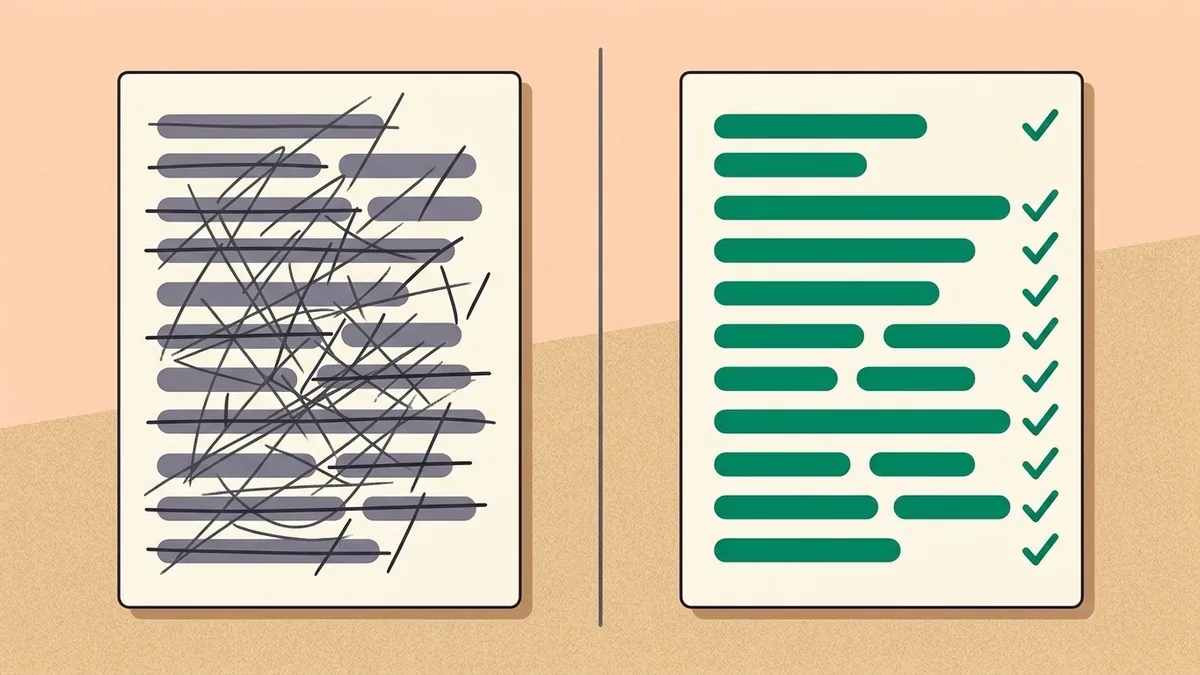
Stylistic patterns and detector scores cannot prove authorship. Human writers use formal vocabulary, complex sentences, and transitions too. Flagging a single word or punctuation mark can lead to a false accusation.
Keep these ordinary writing habits in mind when you review a passage:
- Standard grammatical transitions: Words like "however," "furthermore," "therefore," and "in addition," along with balanced sentence structures, are regular features of formal academic and technical writing. Repeating them across consecutive sentences is an editing concern to smooth out.
- Technical and academic vocabulary: Precise domain terms such as "deterministic," "asynchronous," "constituent," or "methodology" reflect subject-matter expertise. Do not replace accurate technical terms with colloquial words.
- Intentional em dashes: Editors and essayists use dashes to set off parenthetical thoughts or add emphasis. Frequent dashes become an editing concern when they disrupt paragraph flow.
- Clean grammar and formal tone: A well-edited human article should have correct spelling, consistent punctuation, and a coherent structure. Flawless syntax is evidence of careful editing.
Look for clusters of problems that weaken the prose: a rule-of-three list, two vague buzzwords, a trailing "-ing" clause, and an "At its core" opening. Edit each problem for clarity and momentum.
Our article on do AI humanizers beat AI detectors explains how scanners assess these patterns and where their statistical models fail. The Google Search documentation on helpful, reliable content emphasizes original perspective, factual depth, and usefulness over formatting polish.
A practical five-step editing workflow
Step 1: Duplicate the draft and note core facts
Create a working copy of the original text before touching a word. Note the document's central purpose and highlight any technical facts, figures, or dates that cannot change.
Step 2: Mark paragraphs that interrupt reading flow
Skim the entire draft to locate the first paragraphs that stall your reading momentum. Use the diagnostic summary and numbered fixes above as a reference to mark passages that need attention.
Step 3: Edit marked passages one at a time
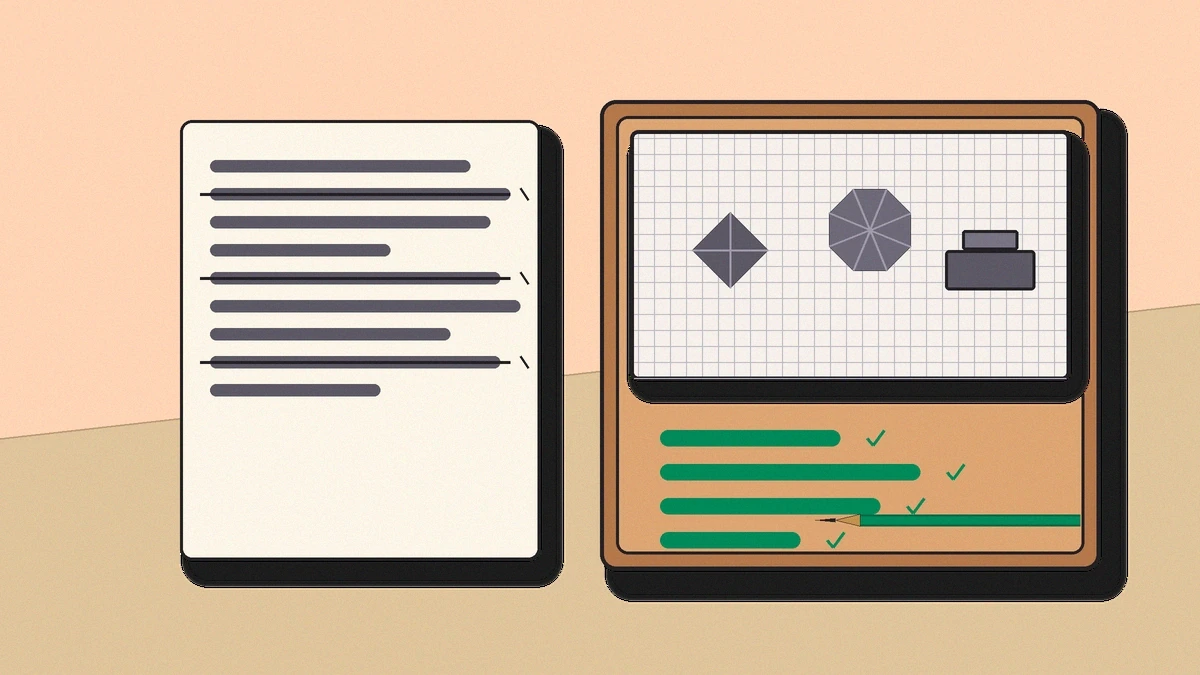
Work through the marked sections in a single pass, revising one passage at a time. Compare each edited sentence with the untouched original before moving on to the next.
Step 4: Check the revision for remaining rhythm issues
Review the revised paragraphs to catch any remaining rhythm issues. Refer back to Low burstiness and uniform sentence cadence to confirm that the prose flows naturally without mechanical repetition.
Step 5: Verify claims against sources
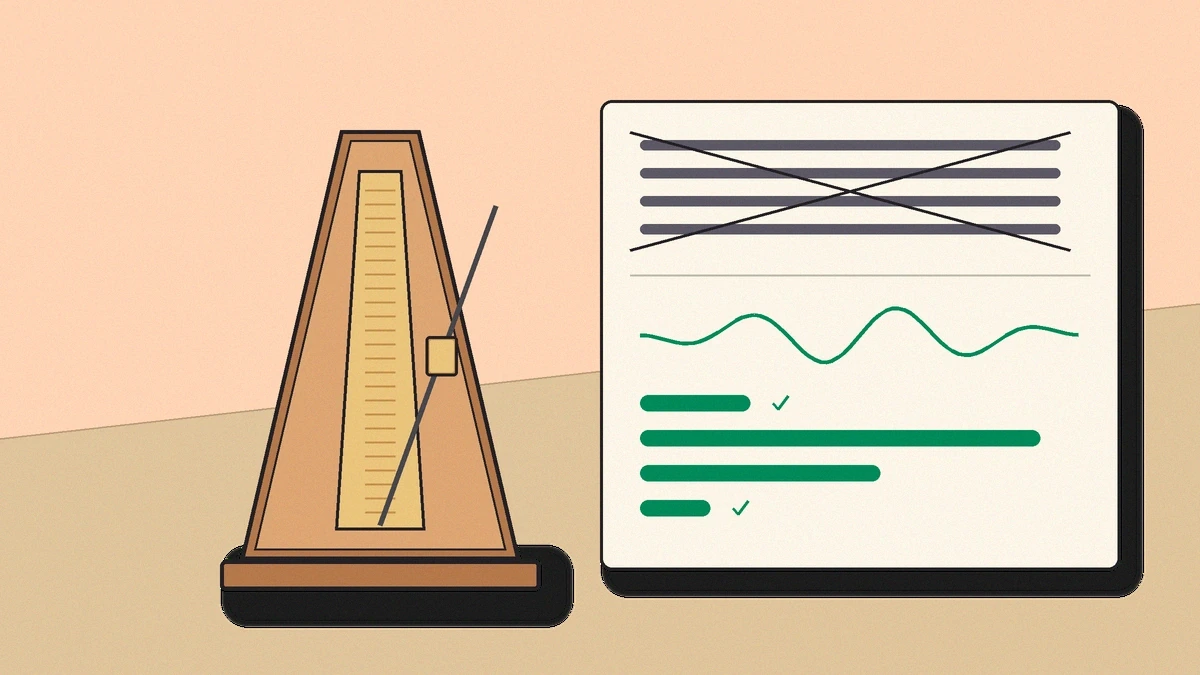
Audit every claim and technical condition against the original draft and your source, then reread the opening and ending. For an extended walkthrough on protecting technical details during revision, see our guide on how to humanize AI text manually.
Common mistakes when revising AI text
These four editing habits can leave a draft with new problems.
1. The synonym trap
A thesaurus is a tempting response to an overused word. But replacing "delve" with "plunge headlong" or "pivotal" with "momentous" only makes the phrasing stranger.
Use an ordinary word that fits the task. "Examine," "read," or "test" can replace "delve into." For "pivotal," try "important," or say what effect the thing has.

2. Forcing artificial casualness and slang
Some writers add slang, idioms, contractions, or spelling mistakes to disguise an AI draft. They assume that an aggressively casual voice will establish human authorship because models tend to sound formal.
That approach damages credibility. A technical document, compliance guide, or executive proposal needs a tone suited to its reader. Clear explanations, a point of view, and original thought give writing a human voice without forcing it to sound like a chat message.
3. Stripping necessary technical qualifications
Shortening a sentence can remove the condition that makes it accurate. "Caching improves response times when cache hit rates exceed eighty percent" does not mean the same thing as "caching improves response times." Keep the qualification, even if the sentence takes longer to read.
4. Relying on repeated automated rewriters
Another mistake is passing an AI draft through a paraphraser or humanizer, then feeding that output into a second tool. As the comparison of humanizers and paraphrasers explains, a reader should check whether the rewrite preserves original facts and technical conditions rather than assuming fluent phrasing is accurate.
Repeated passes compound changes in meaning and can introduce awkward vocabulary or broken grammar. Treat an automated first pass as a proposal you still need to check, and make the final edits by hand. For more on their limits, read what an AI humanizer does.
Frequently asked questions about signs of AI writing
Can you prevent these signs by using better prompts?
Instructions such as "avoid words like delve, crucial, and testament," "do not use em dashes," and "vary sentence lengths" may help with a rough draft. Review the result for trailing participles, formulaic conclusions, and factual accuracy, then do the final line editing yourself.