Which AI model translates and edits literary prose best?
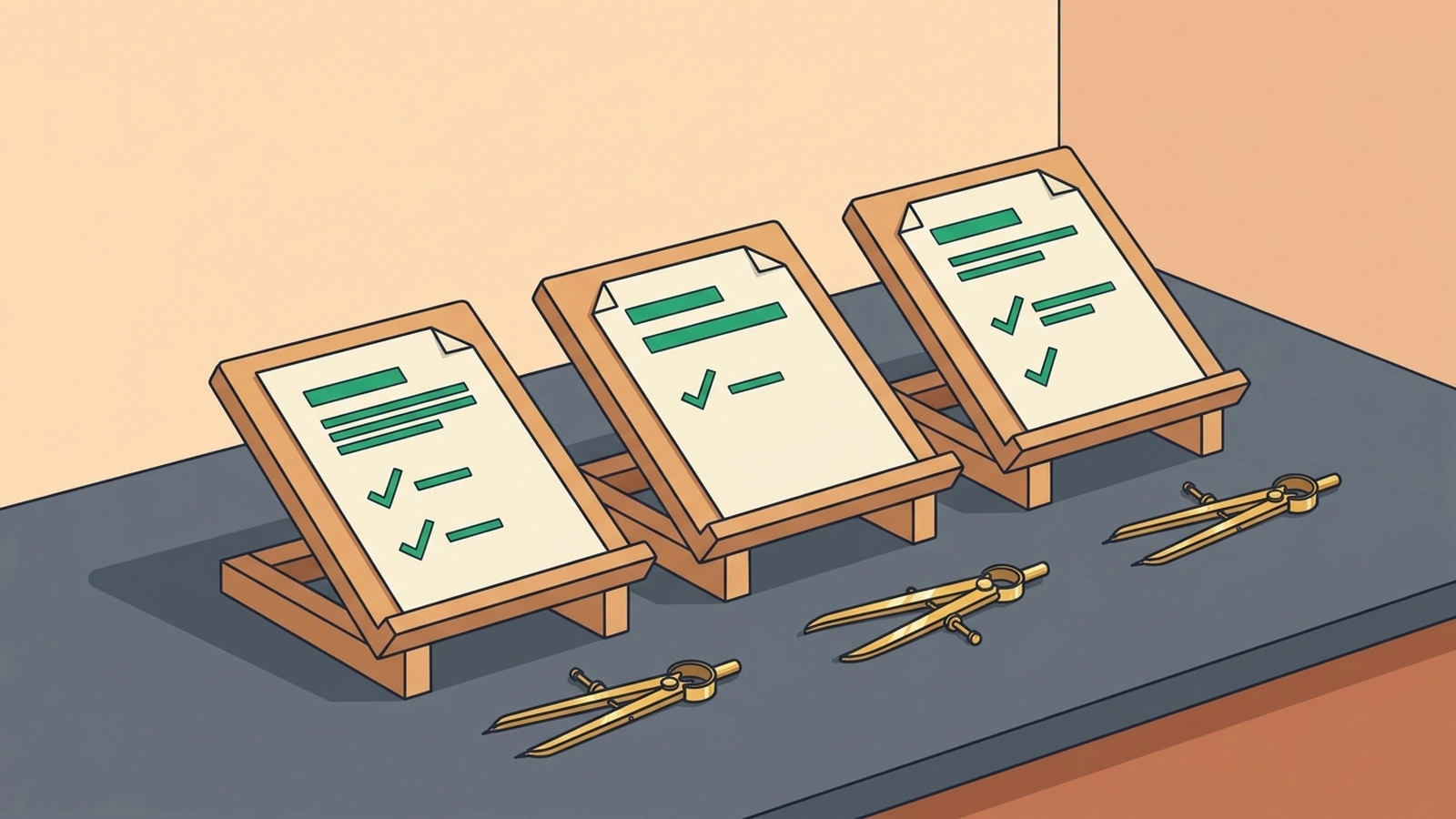
No single model won every category in a side-by-side evaluation of English-to-Russian literary translation and editing. The results highlight distinct strengths across different dimensions of prose rather than an overall winner for rewriting. While the findings provide practical insight into how frontier models handle narrative cadence, fidelity, and line editing, they cannot tell you which model will handle your own writing tasks best:
- For rhythm in the Russian passages the tester read, Claude Opus 5 stood out.
- For the fewest suggested edits to the Russian draft, Gemini 3.7 Flash led under each of three judges.
- For fidelity in those passages, GPT 5.6 Sol stood out in the tester's close reading and recovered one damaged source phrase.
Two models also suggested fewer edits to their own drafts than outside judges did. An independent editing pass is worth trying, provided you check the changes yourself. The counts do not measure an error rate across models or general rewriting tasks.
The published comparison of literary translation and editing covered English-to-Russian translations of about 100 narrative paragraphs. One tester evaluated the translations. Keep that scope in mind when applying the findings to your own writing.
What makes rewritten prose sound natural?
A paragraph can have correct grammar and punctuation and still read like an automated report. When readers call a passage robotic, they are usually reacting to its repeated sentence patterns rather than spelling mistakes. Fixing those patterns takes more than a grammar check.
In an automated draft, sentence after sentence may follow the same pattern: subject, verb, then a noun phrase of roughly the same length. That rhythm gets tiring. Human speech varies more, moving between short statements and longer thoughts, with different ways of opening a sentence.
Word choice matters too. Machine drafts tend to favor Latinate nouns and abstract jargon, often making an ordinary point sound grand. Look for an action buried in a noun and try a plain Anglo-Saxon verb. A team that "conducted an implementation of a procedure" applied the procedure. The shorter wording tells the reader what happened.
Watch what the rewrite adds. Decorative adjectives, forced transitions, and broad claims can make a passage stiffer while taking it further from the source. An editor should remove clutter without adding unchecked details or changing your meaning. Our guide to the signs of artificial writing shows patterns to look for in your draft. The guide to AI humanizers explains what those tools aim to change and what you still need to check.
Check a rewrite for three things:
- Does it vary clause lengths and sentence openings enough to read naturally?
- Does it use plain, precise words that fit the passage?
- Does it keep every detail, qualification, and constraint without changing what they mean?
Frontier models compared in the translation and editing test
A high score on a coding or mathematics benchmark tells you little about how a model will translate literary narrative or edit an essay. It may still produce wooden, formulaic prose. Dedicated rewriting tools often put fixed prompts around these foundation models; our guide to choosing an AI humanizer looks at that option. Using a foundation model directly gives you more control over the voice you request, the constraints you set, and the order of editing passes.
The comparison tested four main model configurations from three developer families:
- Claude Opus 5: One translation drafter and one judge in the comparison.
- Gemini 3.7 Flash: A translation drafter and a judge, with fewer suggested edits to its draft in this sample.
- Gemini 3.1 Pro: An earlier model in the same family, also used as a drafter and judge.
- GPT 5.6 Sol: A drafter and judge whose translation the tester found especially faithful to the source.
Side-by-side test results: the evaluator matrix
The tester used the same English science fiction passages and glossary for four Russian translations. Other models proposed edits to each draft, and the tester read matching passages alongside the original. The edit count is one signal, not an objective quality score: a judge can propose a worse edit, and a fluent draft can still lose meaning.
Each judge applies its own level of strictness, so compare drafts within a judge's column. Comparing raw counts from different judges mixes their editorial preferences with differences in the writing. Keeping the judge the same lets you see which drafts drew more corrections under that standard.
The table shows the total suggested edits across the test passages. A lower count indicates that the judge found fewer things to correct in the initial draft:
| Drafting model | Edits from Opus judge | Edits from Sol judge | Edits from Pro judge |
|---|---|---|---|
| Gemini 3.7 Flash | 40 | 48 | 52 |
| Claude Opus 5 | Not evaluated | 61 | 63 |
| GPT 5.6 Sol | 55 | 51 (self-review) | 69 |
| Gemini 3.1 Pro | 74 | 74 | 65 (self-review) |
Gemini 3.7 Flash drew the fewest proposed edits from all three judges. Under Opus, the newer Flash draft drew 40 edits against the older Pro draft's 74. The tester also found more calques, bureaucratic phrasing, and redundant pronouns in Pro's Russian. The judges agreed on which draft needed fewer changes here, but that does not settle which sounded most natural or establish that one model family always writes better.
The tester also tried Gemini Flash 3.8. The Opus judge proposed 50 edits to its draft versus 40 for Flash 3.7; the Sol judge proposed 57 versus 48. In that Russian sample, Flash 3.8 also failed to put dialogue on new lines. A newer version deserves a fresh test on the material you actually edit.
Qualitative differences in literary translation and editing
Edit counts leave out much of what you hear when you read a passage. In the matching samples, the tester found differences in rhythm and voice, as well as in how the models handled unclear source text. Those differences help explain the tradeoffs behind the counts.
Claude Opus: rhythm in the Russian translation
The tester favored Opus for the rhythm of its Russian translation. In several short passages, it used compact, forceful phrasing where other drafts were stiffer.
The tester also noted occasional liberties and dry patches. If you use Opus for literary translation or prose revision, compare its elegant sentences against the source, especially where a small qualification matters.
GPT 5.6 Sol: factual fidelity and error recovery
In the tester's close reading, Sol was the most faithful to the original of the four translations. That judgment concerned the passages read, not every kind of text.
Sol also recovered a damaged phrase that the other models did not. In one paragraph, optical character recognition errors had merged words and removed spaces and punctuation around a character's title and proper name. Other models deleted the fragment or made incorrect guesses. Sol used the surrounding text to recover the missing words and restore the character's title.
The tester found Sol's Russian more bookish than Opus's, with a tendency toward dry, formal wording. Keep that tradeoff in mind if you want a lively voice. Faithfulness to the source and a pleasing rhythm are separate things to check.
Gemini 3.7 Flash: a cleaner first draft
Gemini 3.7 Flash combined accuracy with clear wording in this sample. Its direct sentences avoided the heavy bureaucratic syntax of Gemini 3.1 Pro. The tester chose Flash for drafting translations because the comparison left less to clean up.
Gemini 3.1 Pro: persistent calques and bureaucratic habits
In Gemini 3.1 Pro's narrative and dialogue passages, the tester found literal calques, formal phrasing, repeated pronouns, and awkward word choices. Both the Opus and Sol judges proposed 74 edits to that draft. The close reading gives some context for those counts: the problems extended beyond isolated word preferences.
The self-editing blind spot in the test
The comparison includes two cases where a model judged its own translation. Sol proposed 51 edits to its draft, while Opus proposed 55 to the same draft. Pro proposed 65 edits to its own draft, while each outside judge proposed 74. These counts do not show which proposed edits were right. They do suggest that a second perspective can catch passages the drafter leaves alone.
Research on self-correction in reasoning tasks also cautions against assuming that another prompt will reliably repair a model's first answer without external feedback. Reasoning tasks and literary editing differ, so use that paper as a caution, not as proof of a fixed editing failure rate.
The diagnostic test: surface polish versus semantic awareness
The tester also gave the models a single passage with eight defects. This checked whether they would notice a problem with the meaning as well as problems with the wording.
The passage contained seven routine stylistic flaws:
- A verb with the wrong grammatical gender for a male character.
- Bureaucratic wording about calming the governor.
- A word doubled within one sentence.
- One inconsistent spelling of a character's name.
- A second bureaucratic phrase about obtaining information.
- A literal calque from English.
- An incorrect grammatical case ending.
The eighth defect was a deliberate contradiction. The passage described a living spacecraft in imperial units, with hull features several yards across. It then described the ship's eye as a ball three centimeters in diameter. The measurement mixed metric and imperial units and conflicted with the physical proportions established around it.
All three editors, Claude Opus, GPT 5.6 Sol, and Gemini 3.7 Flash, caught and corrected the first seven flaws. They removed the bureaucratic language and repetition and fixed the grammatical agreement. Their responses to the eighth defect differed:
- Gemini 3.7 Flash adjusted the verbs around the three-centimeter measurement to make the sentence read smoothly. It left the contradictory measurement untouched.
- GPT 5.6 Sol improved the sentence structure but also accepted the metric measurement without question.
- Claude Opus left the measurement in place and added an editorial note. It was the only model to tell the reader that the three-centimeter optical sphere conflicted with the multi-yard scale of the surrounding paragraph. An editor should ask about a doubtful measurement before changing it; that is what the note allowed a person to review.
Include a similar check in your own comparison if you need an editor to question meaning as well as wording. This single diagnostic does not show that any model will catch every contradiction.
Worked before-and-after examples
These three examples address different problems: buried actions, repetitive sentence patterns, and clauses that trail off into vague commentary. Compare the wording before and after each edit, then check which details stayed in place.
Example 1: Corporate memo with bureaucratic nominalizations
Here is a draft that runs too long:
Before: The implementation of our updated software protocol was undertaken by the IT department for the purpose of facilitating a reduction in operational downtime. It is of paramount importance to recognize that the commencement of employee onboarding regarding the new workflow will be executed next Monday, serving as an effective means of ensuring procedural compliance across all regional divisions.
After: The IT department deployed the updated software protocol to reduce operational downtime. Employee onboarding for the new workflow begins next Monday to maintain procedural compliance across all regional divisions.
Editorial explanation: The original draft relied heavily on nominalizations, turning active verbs into clumsy nouns such as "undertaken for the purpose of facilitating a reduction." The rewrite replaces these constructions with direct action verbs ("deployed," "to reduce," "begins"). The puffed-up introductory phrase "It is of paramount importance to recognize that" was cut entirely because it added zero operational facts. Every specific deadline, department name, and organizational objective was retained.

Example 2: Technical summary with robotic sentence rhythm
Here is a draft with monotonous sentence structure:
Before: The database cluster operates across three distributed availability zones. The replication service synchronizes transaction logs at five-second intervals. The primary controller manages read and write operations during normal system states. The standby controller monitors heartbeat signals to initiate automatic failover if network latency exceeds two hundred milliseconds.
After: The database cluster operates across three distributed availability zones, where a replication service synchronizes transaction logs at five-second intervals. During normal system states, the primary controller manages read and write operations. The standby controller monitors heartbeat signals and initiates automatic failover if network latency exceeds two hundred milliseconds.
Editorial explanation: The original draft contained four consecutive sentences that followed an identical subject-verb-object structure, creating a mechanical rhythm. The rewrite combines the first two sentences using a relative clause and introduces a prepositional opener in the second sentence. The final sentence keeps the continuous monitoring of heartbeat signals and preserves the exact failover condition when network latency exceeds two hundred milliseconds. All technical details remain unchanged.
Example 3: Narrative summary with trailing participle clauses
Here is a draft weakened by trailing participle phrases:
Before: The project team reviewed the quarterly performance metrics, highlighting several areas of operational friction and underscoring the necessity of structural realignment, ultimately resulting in the adoption of a revised timeline. It was not just a scheduling change, but a broader strategic repositioning for the upcoming fiscal cycle.
After: The project team reviewed the quarterly performance metrics. The review highlighted areas of operational friction and underscored the need for structural realignment. A revised timeline was adopted as part of a broader strategic repositioning for the upcoming fiscal cycle.
Editorial explanation: The original draft strung multiple present-participle clauses ("highlighting several areas," "underscoring the necessity," "ultimately resulting in") onto a single opening sentence. The rewrite separates the statements into distinct sentences and replaces the negative parallelism ("not just X, but Y") with a direct assertion. Because the original passage does not specify who adopted the revised timeline, the rewrite leaves the adoption neutral rather than attributing it to the team.
Using different models for drafting and editing
You can divide the work into three roles and test whether that helps with your drafts. The English-to-Russian translation comparison demonstrates this workflow, but it did not evaluate general English prose rewriting or establish an overall model ranking. Keep a copy of the source available for the final check:
- Draft the text with a model you can afford to test on your material. The Flash result gives you a candidate to evaluate, though only testing on your target genre will show whether its draft meets your standards.
- Give another model the draft to check for rhythm, repetition, and unclear passages. The tester withheld the source at this stage so the editor would focus on the Russian prose. Ask the editor to flag doubts for review, as Opus did with the measurement.
- Compare the edited text with the original and resolve the flags. A person should check names, dates, numbers, and the argument before publishing. The line editor's approval does not replace that comparison.
Cost and repeated context
If you use an API for long documents, price the full workflow before processing a manuscript. The drafting, editing, and verification passes each use input and output tokens. Prices and cache terms vary by provider and model.
For repeated style instructions or glossaries, read the current caching rules from Anthropic, OpenAI, and Google Cloud. Caching can reduce repeated input processing when your requests meet the provider's conditions. It does not remove the cost of new output or make a second editing pass free.
Common mistakes when evaluating AI models for prose revision
The way you ask for and review a rewrite affects the result. These five mistakes can leave you with stiff prose or a fluent passage that no longer says what you meant.
1. Treating every proposed edit as an improvement
An editor may replace an awkward phrase with one that is smoother but less accurate. The suggested edit count in the translation test includes changes the tester considered harmful. Read a proposed edit in context before counting it as a gain.
2. Assuming higher subscription price guarantees better prose
A higher subscription price does not guarantee better prose. The Flash and Pro results in this literary translation comparison are a reason to test that assumption. Judge the writing a model produces on your material before paying for a tier because you expect it to write better.
3. Confusing paraphrasing with structural rewriting
If the sentence structure is awkward, replacing its words with more sophisticated synonyms leaves the main problem in place. Check whether the rewrite has changed how the ideas fit together, or only changed the vocabulary. Our comparison of AI humanizers versus paraphrasers explains the difference between substituting words and revising a passage.
4. Sacrificing factual precision for surface flow
Asking for "engaging" or "conversational" text can lead a model to drop technical qualifications, remove caveats, or add plausible details. A smoother sentence is no improvement if it changes the facts. In technical or professional writing, compare each edited sentence with the original parameters, including the conditions that limit a claim.

5. Skipping the human verification loop
You still need to judge specialized terminology, legal liabilities, and whether the writing sounds like you. Treat a model's changes to sensitive workplace documents as suggestions. Our guide on how to humanize AI text manually gives you a process for making those decisions by hand.
Step-by-step guide to testing models on your own prose
Test models on the writing you actually need to revise. A comparison built around your own paragraphs gives you something concrete to judge: which changes help, which alter the meaning, and how much editing remains. Use these five steps to keep the comparison consistent.
Step 1: Assemble a representative test corpus
Choose 20 to 50 paragraphs from the kinds of writing you usually handle. Include email updates, technical explanations, narrative summaries, and dialogue where they belong in your workload. Avoid generic marketing copy for this test: promotional language can hide the stylistic weaknesses you are trying to spot.
Step 2: Establish clear editorial criteria
Decide what you need before reading the outputs. You might be checking sentence length, active verbs, technical accuracy, or conversational tone. Use the same criteria for each draft. The principles of writing clear sentences give you a starting point for judging clarity and spotting wording the sentence does not need.
Step 3: Run independent drafting passes
Give the same passages and instructions to at least two different model families. State the constraints in the prompt: preserve the facts, do not invent details, avoid corporate buzzwords, and vary sentence lengths. Keeping the instructions identical lets you compare how the models respond to the same request.
Step 4: Perform cross-model evaluation
Give Model A's draft to Model B for line editing, then give Model B's draft to Model A. Count the substantive corrections each suggests. Read the changes as well as counting them: an edit that fixes a syntax problem deserves different weight from one that simply expresses the editor's preference.

Step 5: Read the outputs aloud against the source
Read each version aloud to catch awkward rhythms and transitions you may miss on screen. Then put it beside the source and check every factual point. The version you keep should preserve the original meaning and sound natural for its reader. A conversational rhythm is useful only when it fits the writing.
Frequently asked questions
Which AI model is best for creative writing versus business documents?
Compare models directly on sample paragraphs from each genre. For creative writing, test how well a model preserves voice, sentence variety, and natural dialogue without flattening character tone into generic prose. For business documents, test how strictly a model preserves operational figures, technical terms, and deadlines while stripping bureaucratic fluff. Run two candidate models through identical prompts on your own draft passages, count how many manual edits each version requires, and select the model that produces cleaner drafts for that specific format.
Why do models from the same family make similar rewriting mistakes?
The comparison did not establish why related models might share habits. A family name alone cannot explain a particular editing mistake. Look at the actual changes each model proposes before deciding whether switching families helps with the problem in your draft.
Can custom system instructions fix a model's self-editing blind spot?
You can ask a model to act as an uncompromising copyeditor. That can prompt more edits, but it does not remove the blind spot. The two self-review cases in the comparison give you a reason to check whether those extra edits help. A stricter persona is still the same model reviewing its own wording.
How much does a multi-model editing pipeline cost compared to a single subscription?
There is no fixed comparison without knowing the model prices, output length, cache eligibility, and number of passes. Price the whole process before committing a long manuscript to it. Include the editing and verification passes in that estimate, not just the first draft.
What should you do when an AI rewrite changes the meaning of your text?
Check whether the prompt asked for creativity or brevity without setting factual boundaries. That is a common cause of changed meaning. State explicitly that the rewrite must not omit or alter facts, numbers, dates, or technical terms. If the problem continues, split the passage into shorter sentences and edit it by hand so you can control the wording.